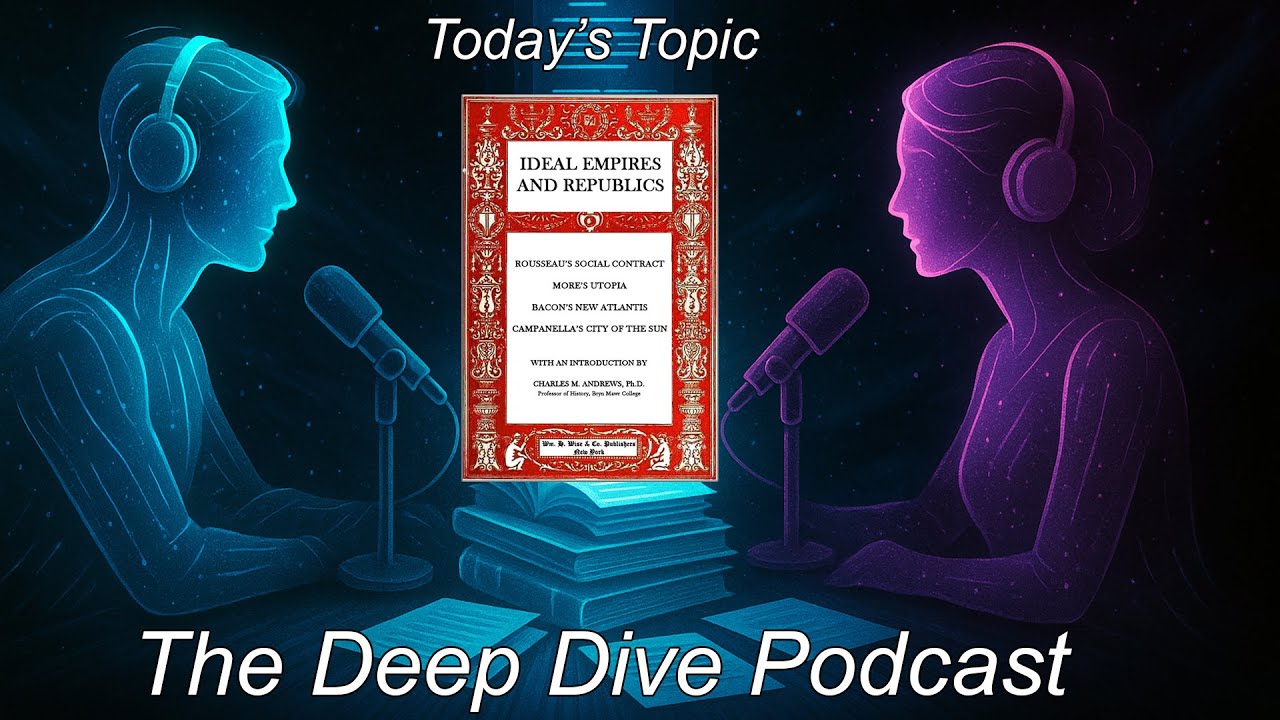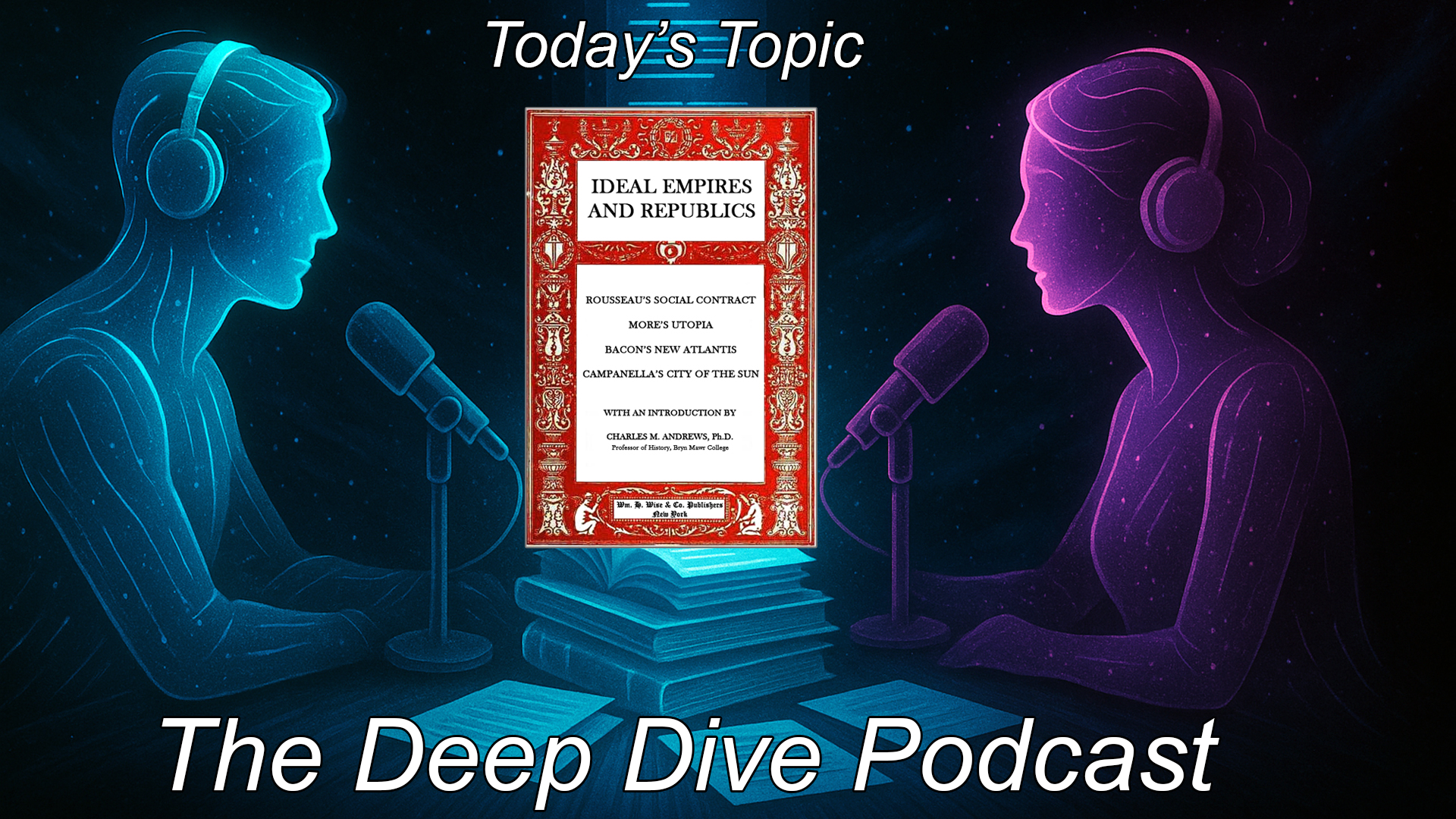
Ideal Empires and Republics takes listeners on a fascinating deep dive into four groundbreaking utopian visions—Thomas More’s Utopia, Rousseau’s Social Contract, Bacon’s New Atlantis, and Campanella’s City of the Sun—that promised perfect societies but exposed a chilling paradox. Each thinker grapples with real problems like inequality, injustice, ignorance, and chaos, yet their blueprints for total equality, order, and efficiency demand the total suppression of individual liberty, privacy, and personal desires. In More’s world, private property vanishes for communal abundance, enforcing regimented labor, shared meals, rotating houses, and even pre-marital naked inspections; Rousseau’s “general will” requires total alienation of rights to an absolute collective sovereign, eliminating factions and relying on a godlike legislator; Bacon’s scientific utopia centralizes secret knowledge in Solomon’s House for technological mastery while enforcing chastity and isolation; and Campanella’s theocratic City of the Sun abolishes families entirely, institutes eugenics, controls appearance down to high heels (punishable by death), and has citizens stone the condemned. Together, these influential works reveal how the noble dream of human perfection inevitably leads to totalitarian control, standardized citizens, and the erasure of what makes us free and unique. The episode leaves you pondering a provocative question: What part of modern life—privacy, family bonds, or self-interest—would you destroy to achieve utopia? Gripping and unsettling, this exploration will make you rethink the true cost of perfection and why imperfect freedom might be worth preserving.