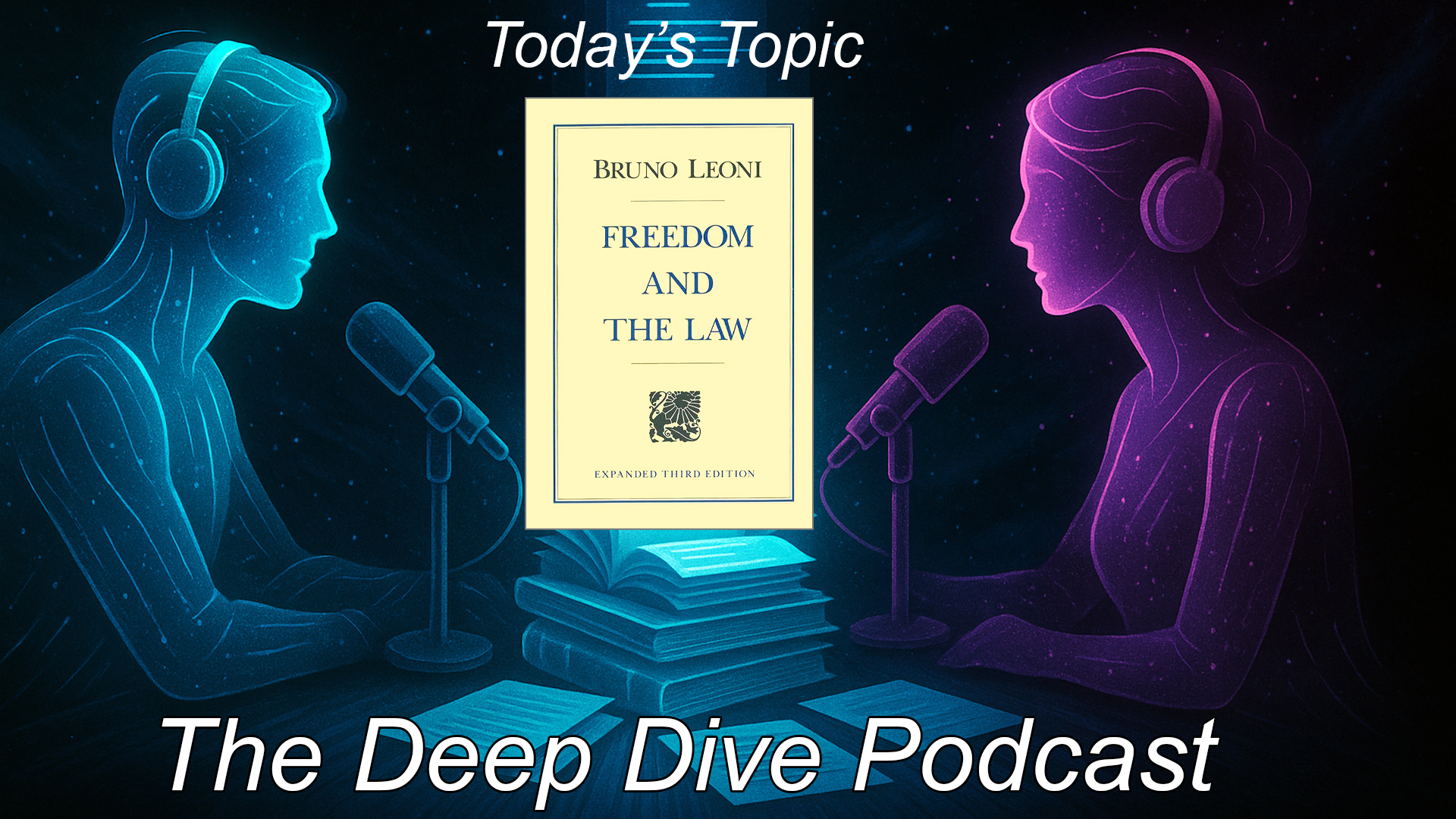
Freedom and the Law by Bruno Leoni (from 1958 lectures) delivers a radical critique: the greatest threat to liberty in democracies isn’t tyrants but the explosive growth of legislation—statutes and regulations that drown society in unpredictable, arbitrary rules. Leoni distinguishes “law” (discovered organically through customs, precedents, and judicial reasoning, like language or markets) from “legislation” (top-down commands from politicians, often favoring special interests and eroding certainty). This “silent revolution” equates law with legislation, turning the state into a tool for group warfare via taxes, mandates, and retroactive changes that suppress individual freedom. True rule of law requires general, predictable, non-discriminatory rules that apply equally, protecting long-term planning and voluntary cooperation. Leoni warns that modern interventionism creates a new despotism through sheer volume and complexity, where laws become tools of plunder rather than justice. He advocates dramatically reducing legislative output to let spontaneous, discovered rules reemerge based on trust and mutual agreement. This eye-opening classic challenges us: in an age of endless regulations, is the boldest path to liberty simply to legislate less and rediscover the organic order that once sustained free societies?
The Myth of the Robber Barons: A New Look at the Rise of Big Business in America
The Myth of the Robber Barons dismantles the long-held narrative that America’s Gilded Age titans like Vanderbilt, Rockefeller, and Carnegie were ruthless villains exploiting workers and crushing competition. Historian Burton Folsom distinguishes between “market entrepreneurs,” who innovated to lower prices and create value (e.g., Vanderbilt slashing steamship fares by 90% through efficiency), and “political entrepreneurs,” who relied on government subsidies and failed spectacularly (e.g., Collins’ subsidized lines collapsing). Market giants like James J. Hill built superior railroads without handouts, outlasting wasteful, corrupt subsidized rivals, while Carnegie and Rockefeller revolutionized steel and oil by focusing on quality and cost-cutting. Folsom argues true capitalism thrives on voluntary cooperation and consumer service, not cronyism, where political favors breed inefficiency and higher costs for all. This distinction reveals how the “robber baron” label smears innovators while ignoring real parasites using state power. The book warns that today’s crony capitalism echoes those failures, urging a return to free-market principles for genuine progress. Provocative and eye-opening, it challenges: in an era of bailouts and regulations, are we rewarding true creators or just modern political entrepreneurs?