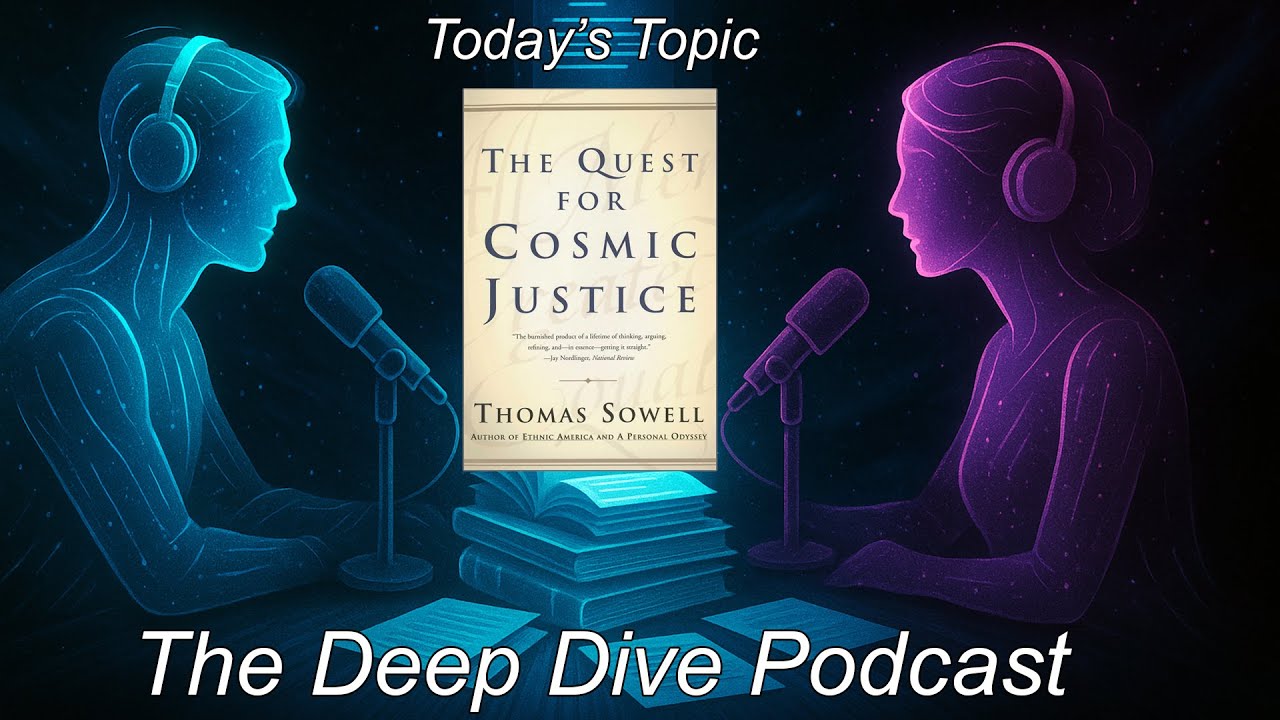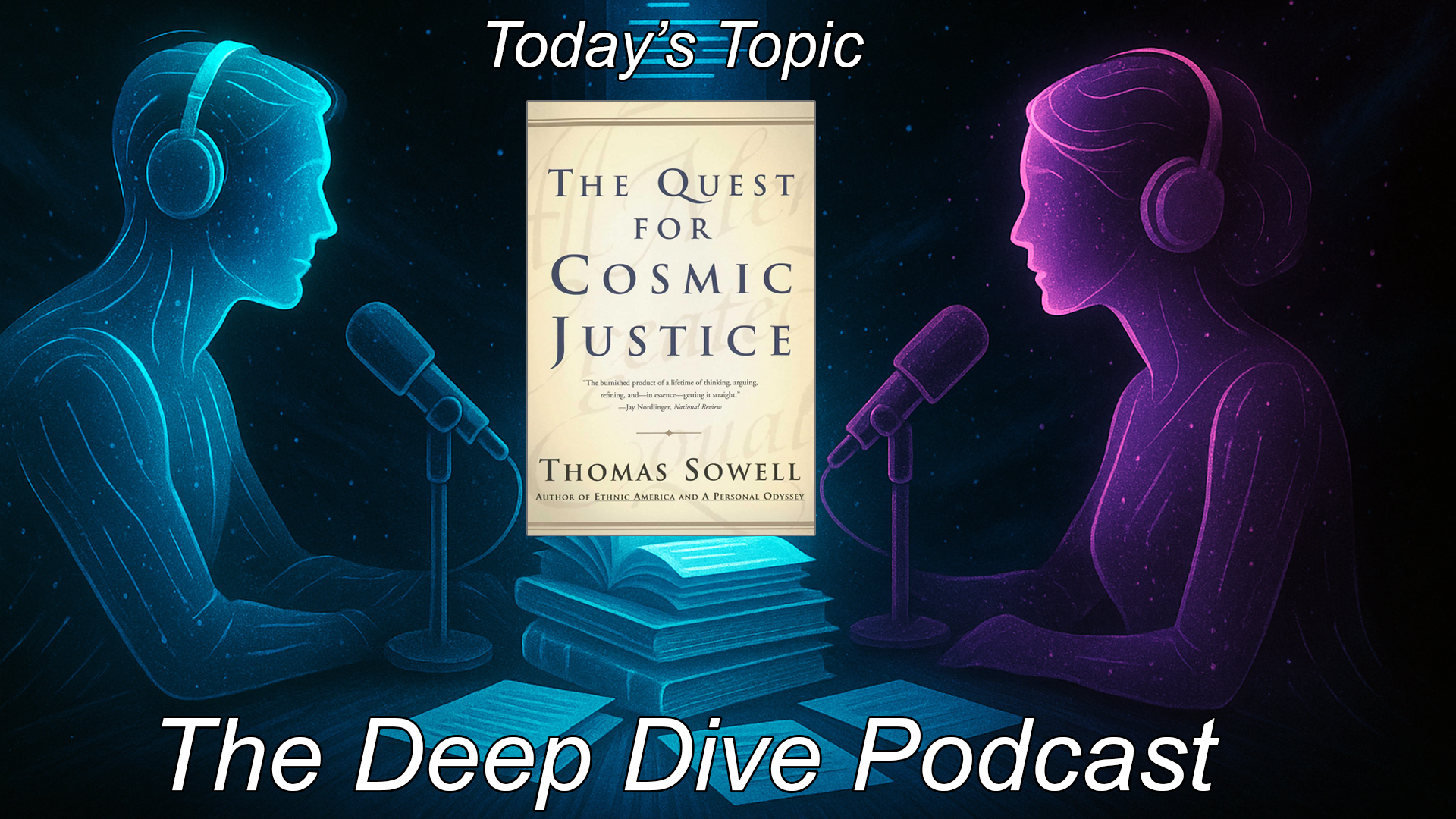
The Quest for Cosmic Justice dives into Thomas Sowell’s powerful critique in his book of the same name, exposing how superficial agreement on “justice” masks two incompatible visions tearing society apart. Traditional justice focuses on fair, impartial processes and known rules applied equally to everyone—like Lady Justice blindfolded—judging actions without regard to outcomes or personal circumstances. Cosmic justice, by contrast, demands equal results by correcting all undeserved misfortunes from society, genetics, bad luck, or history, requiring deliberately unequal rules, retrospective adjustments, and vast government power to override individual choices and market outcomes. Sowell warns this quest undermines the rule of law through vague statutes, erodes incentives and personal responsibility (as seen in affirmative action lowering motivation or criminal sentencing factoring in unrelated backgrounds), and imposes new injustices on innocent third parties, such as forcing pizza delivery drivers into dangerous neighborhoods. It fosters dependency, statistical mirages about fixed poverty, and centralized elite power that clashes with America’s founding emphasis on limited government and liberty. The episode challenges listeners: in chasing the illusory perfect fairness of cosmic justice, do we risk losing the real, imperfect freedom protected by traditional justice and the rule of law?