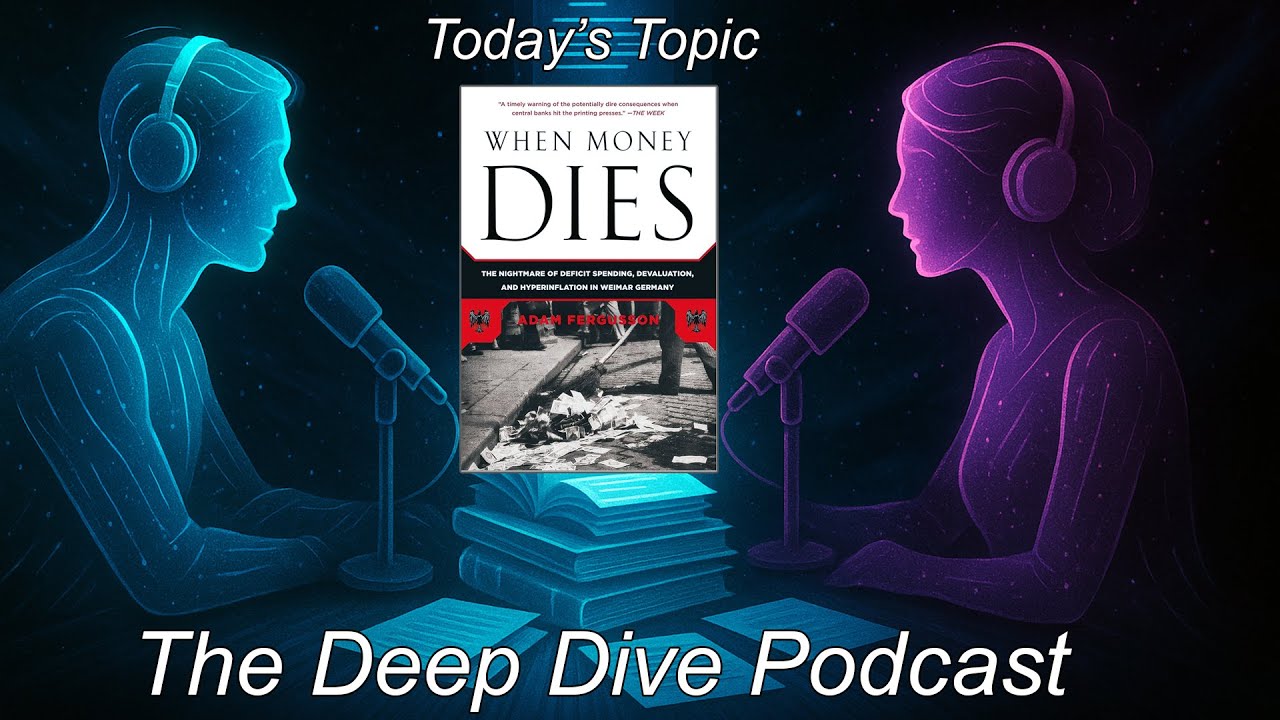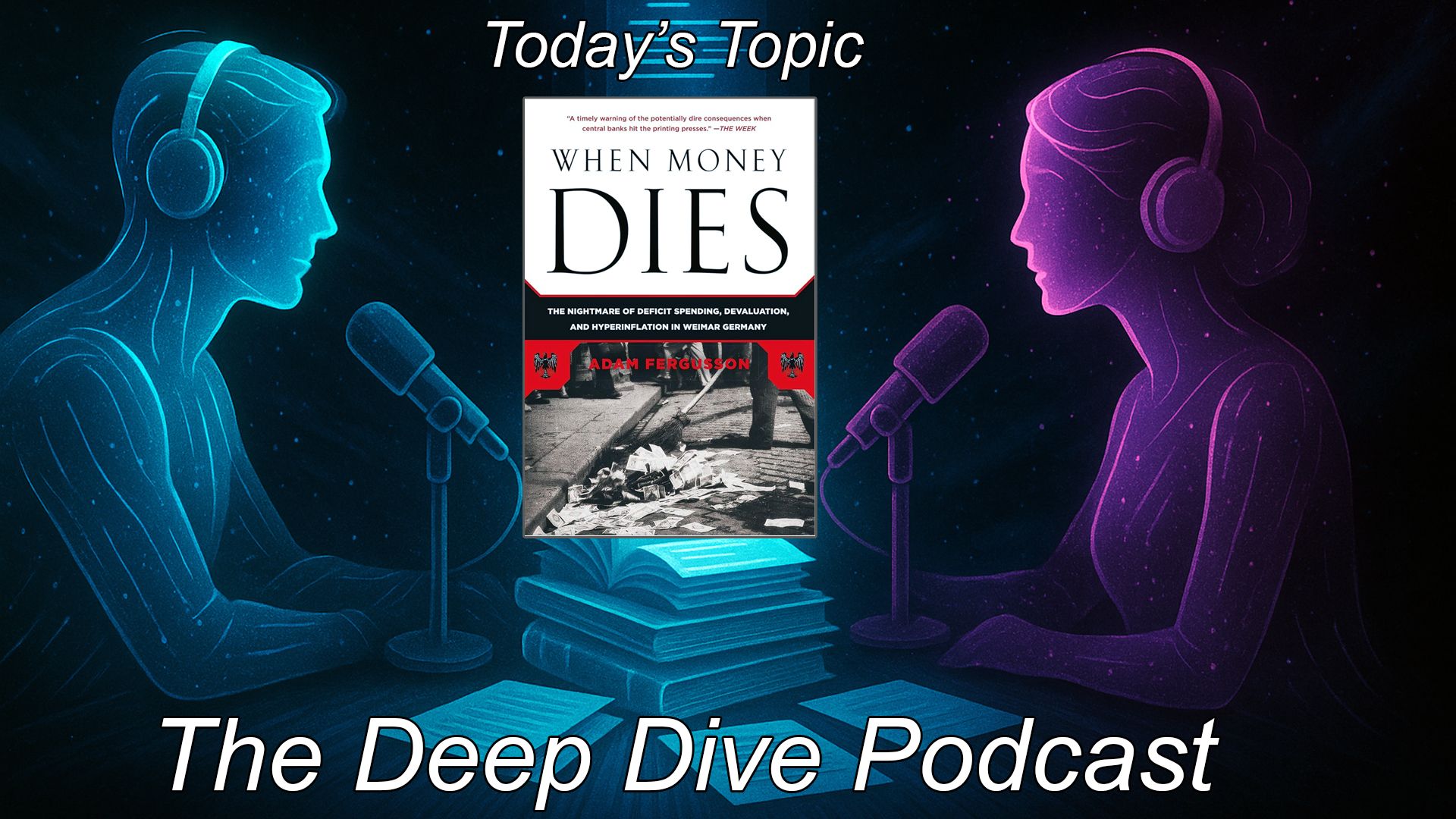
When Money Dies is Adam Ferguson’s harrowing 1975 account of the Weimar Republic’s hyperinflation (1919–1923), one of history’s most catastrophic monetary collapses. Starting from a stable pre-war mark, Germany’s currency was destroyed by wartime borrowing, Versailles reparations, and relentless printing—reaching the surreal point where one British shilling equaled one trillion marks, with workers paid twice daily and prices rising while drinking coffee. The middle class—savers, pensioners, professionals—saw their life’s work evaporate, while unions, industrialists, and the state benefited from subsidized wages, frozen rents, and devalued debt, creating a silent wealth transfer and moral inversion where greed, theft, prostitution, and hoarding became rational survival tactics. Trust collapsed: contracts meant nothing, the future dissolved, civility eroded, and corruption spread from street crime to high officials, breeding xenophobia, anti-Semitism, and political extremism that fueled Hitler’s Beer Hall Putsch. Stabilization came abruptly in late 1923 with the Rentenmark, backed psychologically by land and industry, enforced by decisive action that halted the presses and restored confidence—but only after brutal short-term pain: mass bankruptcies, soaring unemployment (over 2 million), and the temporary suspension of constitutional rights under military rule. Echoing the American founders’ experience with the worthless Continental currency, Ferguson warns that treating money as a political tool rather than a moral trust inevitably erodes liberty, social cohesion, and the rule of law. This gripping episode leaves listeners confronting a timeless question: what hidden costs are modern societies accumulating by repeatedly postponing the hard choice between unemployment and insolvency?