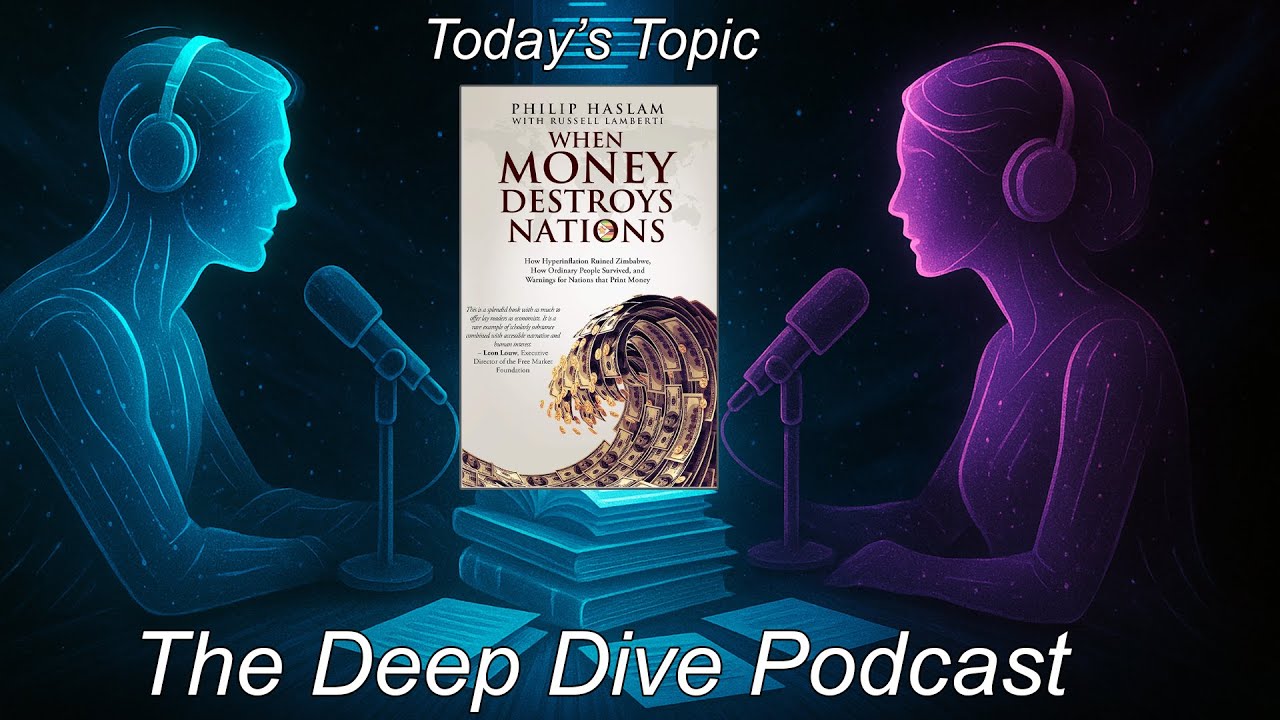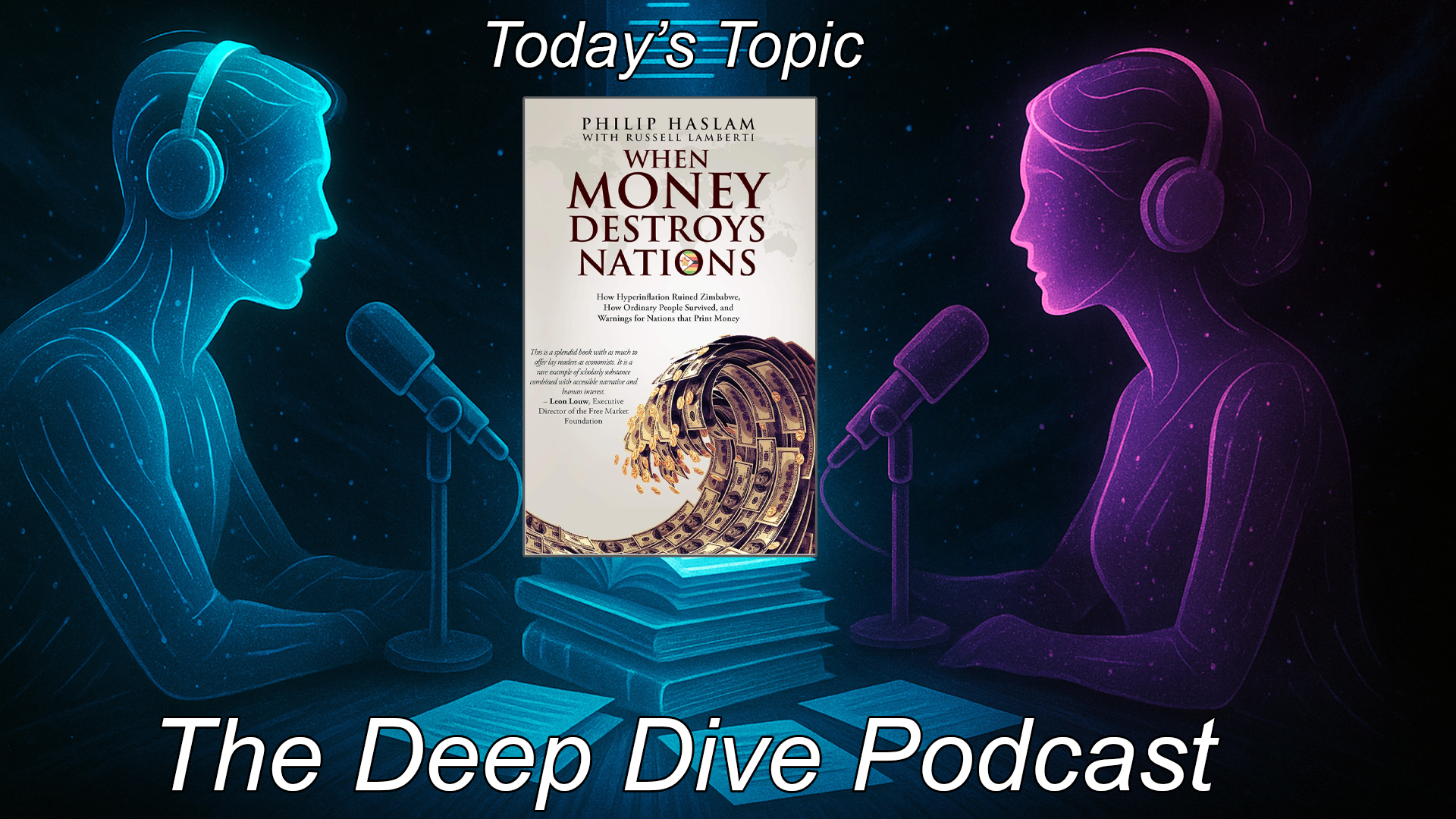
When Money Destroys Nations by Philip Haslam and Russell Lamberti delivers a gripping, firsthand account of Zimbabwe’s catastrophic hyperinflation from 2000 to 2009, where annual inflation peaked at an incomprehensible 89.7 sextillion percent in November 2008. Triggered by unfunded war-veteran pensions in 1997, followed by violent land seizures in 2000 that gutted commercial agriculture and exports, the Mugabe regime chose the printing press over fiscal restraint—creating trillions in new Zimbabwe dollars to cover deficits. Prices doubled hourly, ATMs ran dry, workers were paid twice daily, and basic goods vanished; people resorted to desperate survival currencies such as wooden “macro pallets” of canned goods, fuel coupons, and even tampons as mediums of exchange. The middle class was obliterated, infrastructure (water, power, hospitals) collapsed, and the regime responded with draconian price controls, surveillance, and extortion by agencies like the National Economic Conduct Inspectorate. Dollarization in early 2009 finally stabilized the economy overnight by restoring honest money, though it brought immediate brutal pain—mass bankruptcies and soaring unemployment. The authors draw sobering parallels to Weimar Germany and the American founders’ experience with the worthless Continental dollar, arguing that sound money is moral architecture protecting liberty; when governments treat currency as a political tool, trust evaporates, coercion replaces cooperation, and freedom dies. This harrowing story forces a timely question: as modern economies pile on debt and experiment with endless money creation, what hidden costs are we postponing, and how close are we to our own Black Friday?