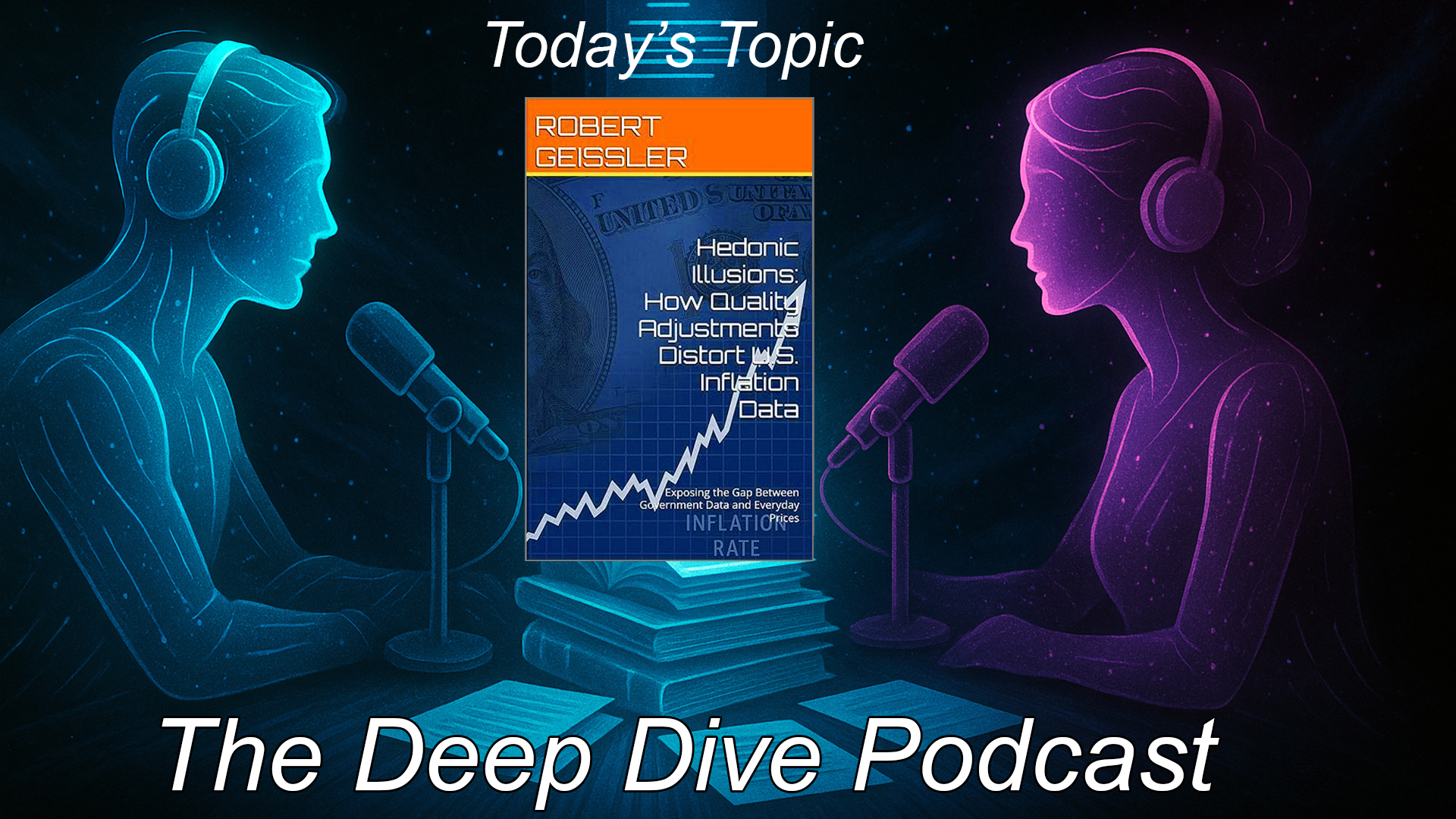
Hedonic Illusions: How Quality Adjustments Distort U.S. Inflation Data exposes the disconnect between Americans’ lived experience of rising costs and the tame inflation reported by the Consumer Price Index (CPI), arguing that hedonic adjustments—factoring in “quality improvements” like faster processors or better fuel efficiency—systematically understate price hikes. Author Robert Geissler details how the Bureau of Labor Statistics (BLS) uses regression models to subtract imputed values for enhancements in electronics, cars, appliances, and housing, making new models appear cheaper even as sticker prices rise. For instance, a 10% higher-priced smartphone with upgraded features might show as flat or declining in CPI terms, ignoring that consumers often pay more for unwanted bells and whistles. This methodology, ramped up after the 1996 Boskin Commission, has likely understated inflation by 1–3% annually, eroding trust in data that shapes Federal Reserve policy, Social Security adjustments, and wage negotiations. Geissler highlights real-world consequences: stagnant real wages despite nominal gains, hidden erosion of purchasing power, and policy decisions based on flawed metrics that delay rate hikes or stimulus. He proposes alternatives like raw-price tracking or MIT’s Billion Prices Project for transparency. This eye-opening analysis challenges: if official inflation masks the true squeeze on everyday Americans, how much wealth has been quietly siphoned away, and what reforms could restore honest economic reporting?