Greg Stuessel

What Social Classes Owe Each Other: The Forgotten Man and the Price of Forced Compassion

What Social Classes Owe Each Other: The Forgotten Man and the Price of Forced Compassion

What Social Classes Owe to Each Other (1883) by William Graham Sumner delivers a sharp, uncompromising critique of the growing 19th-century demand that “the rich,” “the successful,” or “society” must solve every social problem for the less fortunate—demands Sumner sees as the foundation of new class tyranny. Sumner’s enduring challenge: the next time you hear a call for collective solutions enforced by the state, ask—who is C, the Forgotten Man paying the price, and are we willing to sacrifice liberty and self-reliance to pretend we can make everyone equally comfortable?

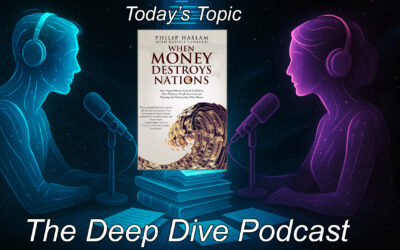
When Money Destroys Nations: The Zimbabwe Warning to the Modern World

When Money Destroys Nations: The Zimbabwe Warning to the Modern World

When Money Destroys Nations by Philip Haslam and Russell Lamberti delivers a gripping, firsthand account of Zimbabwe’s catastrophic hyperinflation from 2000 to 2009, where annual inflation peaked at an incomprehensible 89.7 sextillion percent in November 2008. The authors draw sobering parallels to Weimar Germany and the American founders’ experience with the worthless Continental dollar, arguing that when governments treat currency as a political tool, trust evaporates, coercion replaces cooperation, and freedom dies. This harrowing story forces a timely question: as modern economies pile on debt and experiment with endless money creation, what hidden costs are we postponing, and how close are we to our own Black Friday?

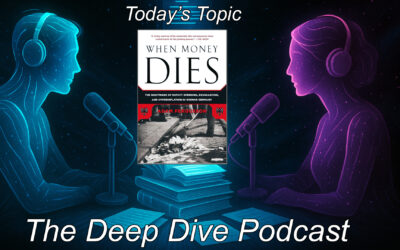
When Money Dies: How Hyperinflation Destroys Nations and Freedom

When Money Dies: How Hyperinflation Destroys Nations and Freedom

When Money Dies is Adam Ferguson’s harrowing 1975 account of the Weimar Republic’s hyperinflation (1919–1923), one of history’s most catastrophic monetary collapses. Starting from a stable pre-war mark, Germany’s currency was destroyed by wartime borrowing, Versailles reparations, and relentless printing—reaching the surreal point where one British shilling equaled one trillion marks, with workers paid twice daily and prices rising while drinking coffee. The middle class—savers, pensioners, professionals—saw their life’s work evaporate, while unions, industrialists, and the state benefited from subsidized wages, frozen rents, and devalued debt, creating a silent wealth transfer and moral inversion where greed, theft, prostitution, and hoarding became rational survival tactics. This gripping episode leaves listeners confronting a timeless question: what hidden costs are modern societies accumulating by repeatedly postponing the hard choice between unemployment and insolvency?

Affirmative Action Around the World: Thomas Sowell on How Equality Became Injustice

Affirmative Action Around the World: Thomas Sowell on How Equality Became Injustice

Affirmative Action Around the World presents Thomas Sowell’s eye-opening empirical study of government-mandated group preferences across countries, cutting through intentions and moral claims to examine real-world outcomes. This sobering global evidence challenges listeners to confront a hard question: when good intentions produce elite capture, social division, and sometimes violence, is engineering group outcomes worth the cost to individual liberty, merit, and national unity?

The Letters of Junius: The Anonymous Rebel Who Taught America to Defend Liberty

The Letters of Junius: The Anonymous Rebel Who Taught America to Defend Liberty

The Letters of Junius (1769–1772) showcases the anonymous writer’s fearless, razor-sharp attacks on Prime Minister Duke of Grafton, Lord North, Lord Mansfield, and even implicitly King George III—letters that terrified the government while galvanizing public opinion in late-18th-century Britain. His final letter directly challenged the king: if the people must defend their God-given rights, on whom could the Crown rely? The letters also circulated widely in the American colonies, where their bold defense of free press, constitutional vigilance, and resistance to arbitrary power resonated with patriots and helped shape the radical Whig ideology that underpinned the American Revolution—this urgent call for citizen vigilance, courage, and active resistance still resonates powerfully today.

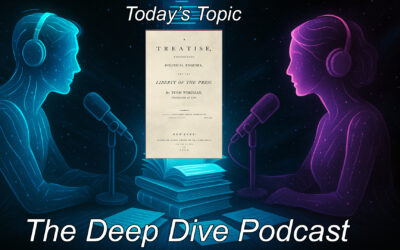
Political Enquiry and the Liberty of the Press: Tunis Wortman’s Forgotten Warning

Political Enquiry and the Liberty of the Press: Tunis Wortman’s Forgotten Warning

A Treatise Concerning Political Enquiry (1800) by Tunis Wortman delivers one of the earliest and most forceful American defenses of press freedom—not as a government-granted privilege, but as a natural right and moral duty for every citizen. This urgent Enlightenment plea challenges us today: when peaceful channels for challenging ideas are blocked by deplatforming, cancellation, or echo chambers, do we risk the very volcanic unrest Wortman warned against? A profound, timely listen that reframes free speech as the bedrock of self-government.

Man vs. The Welfare State: How Government Promises Destroy Freedom

Man vs. The Welfare State: How Government Promises Destroy Freedom

Man vs. The Welfare State delivers Henry Hazlitt’s devastating critique of the modern welfare state’s promise of instant utopia—full employment, poverty’s end, perpetual prosperity—which he argues relies on coercion, taxation, and monetary manipulation that ultimately erode individual freedom, productivity, and personal responsibility. This eye-opening episode forces a provocative question: By trading voluntary cooperation, thrift, and self-reliance for state-mandated security, are we quietly surrendering the very virtues and freedoms that sustain a prosperous society?

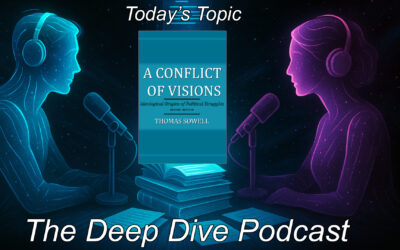
A Conflict of Visions: Two Moral Visions Shaping Society

A Conflict of Visions: Two Moral Visions Shaping Society

A Conflict of Visions masterfully explains why political opponents consistently divide along the same lines across unrelated issues—from taxes and crime to schools and foreign policy—by revealing two incompatible “visions” of human nature and society. The episode challenges listeners: which vision truly underlies your beliefs, and does chasing utopian outcomes risk destroying the decentralized liberty and systemic wisdom that make flourishing societies possible? Compelling and eye-opening, it transforms how you’ll hear every political debate.

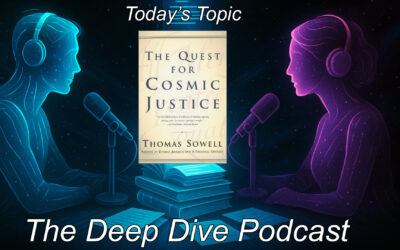
The Quest for Cosmic Justice: The Fatal Pursuit of Perfect Fairness

The Quest for Cosmic Justice: The Fatal Pursuit of Perfect Fairness

The Quest for Cosmic Justice dives into Thomas Sowell’s powerful critique in his book of the same name, exposing how superficial agreement on “justice” masks two incompatible visions tearing society apart. The episode challenges listeners: in chasing the illusory perfect fairness of cosmic justice, do we risk losing the real, imperfect freedom protected by traditional justice and the rule of law?

Taxpayers in Revolt: How Ordinary Americans Fought Back During the Great Depression

Taxpayers in Revolt: How Ordinary Americans Fought Back During the Great Depression

Taxpayers in Revolt uncovers a surprising counter-narrative to the Great Depression: while many turned to the New Deal for bigger government, ordinary Americans organized fierce grassroots resistance against skyrocketing local taxes, corruption, and debt that doubled as a share of national income in just three years. Though the organized revolt eventually collapsed, it forced dramatic short-term budget cuts and kept alive a powerful tradition of fiscal skepticism and vigilance against government overreach.
This eye-opening episode challenges the monolithic “everyone wanted more government” story of the 1930s and leaves listeners asking: At what point does paying taxes cross from civic duty into unwilling submission to an exploitative system?