Greg Stuessel

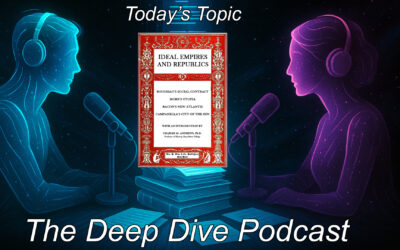
Ideal Empires and Republics: How Utopia Turns into Total Control

Ideal Empires and Republics: How Utopia Turns into Total Control

Ideal Empires and Republics takes listeners on a fascinating deep dive into four groundbreaking utopian visions—Thomas More’s Utopia, Rousseau’s Social Contract, Bacon’s New Atlantis, and Campanella’s City of the Sun—that promised perfect societies but exposed a chilling paradox. Each thinker grapples with real problems like inequality, injustice, ignorance, and chaos, yet their blueprints for total equality, order, and efficiency demand the total suppression of individual liberty, privacy, and personal desires. Gripping and unsettling, this exploration will make you rethink the true cost of perfection and why imperfect freedom might be worth preserving.
A Retrospect of the Boston Tea Party: How Ordinary Patriots Changed History

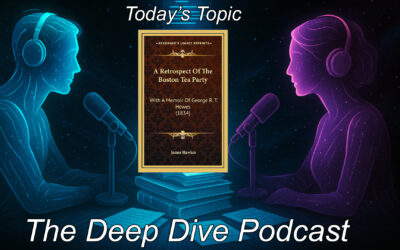
A Retrospect of the Boston Tea Party: How Ordinary Patriots Changed History

A Retrospect of the Boston Tea Party offers a fresh look at the iconic 1773 event through a 1834 memoir spotlighting shoemaker George R.T. Hughes, one of its last survivors. Rather than focusing on famous founders, the book celebrates the quiet courage and integrity of ordinary citizens who secured American liberty through everyday virtue and bold action. It argues that republics thrive not on elite power or wealth, but on the moral backbone of humble people like Hughes, who demanded equal justice from childhood and risked everything without seeking fame or fortune. This thought-provoking episode brings history alive, making you eager to explore how obscure acts of conscience built a nation.

Two Treatises of Government: John Locke and the Birth of Liberty

Two Treatises of Government: John Locke and the Birth of Liberty

John Locke’s Two Treatises of Government (1689) dismantles the divine right of kings, arguing that legitimate political power comes only from the consent of the governed, not heredity or divine grant. In the state of nature, people are free and equal, governed by the law of reason that protects their natural rights to life, liberty, and property, but insecurity drives them to form society and government by majority consent to better secure those rights. Locke limits government power to a fiduciary trust for the public good, with separation of powers and the ultimate right of the people to resist tyranny when rulers breach that trust.

Black Rednecks and White Liberals: Understanding America Through Culture, Not Color

Black Rednecks and White Liberals: Understanding America Through Culture, Not Color

What if the social problems often attributed to racism, slavery, or systemic oppression actually stem from a specific, imported cultural legacy—one that has hindered progress for both white Southerners and black Americans alike? In this provocative episode of The Deep Dive Podcast, we explore Thomas Sowell’s groundbreaking book Black Rednecks and White Liberals, which traces the origins of a distinctive “redneck” culture—marked by improvidence, violence, anti-intellectualism, and different sexual norms—back to the lawless British borderlands, Scottish Highlands, and Ulster, long before it reached American shores. Listen now and confront the uncomfortable question: Are we choosing pride over achievement?

Government by Judiciary: How the Supreme Court Rewrote the Constitution

Government by Judiciary: How the Supreme Court Rewrote the Constitution

What if the Supreme Court isn’t simply interpreting the Constitution, but quietly rewriting it, bypassing the people and acting as an unelected super-legislature? In this eye-opening episode of The Deep Dive Podcast, we unpack Raoul Berger’s landmark book Government by Judiciary, a rigorous historical investigation that argues the Court has fundamentally distorted the 14th Amendment, transforming a narrow, limited amendment meant for basic civil rights into an open-ended tool for judicial policymaking. Listen now and confront the question: If the Supreme Court can change the Constitution without the people’s consent, who truly governs America?

The Creature from Jekyll Island: How the Federal Reserve Took Control of America’s Money

The Creature from Jekyll Island: How the Federal Reserve Took Control of America’s Money

What if the Federal Reserve wasn’t created to stabilize the economy or serve the public, but was deliberately engineered by a secretive banking cartel to centralize financial power and profit from inflation as a hidden tax? In this provocative episode of The Deep Dive Podcast, we unpack G. Edward Griffin’s explosive book The Creature from Jekyll Island, tracing the 1910 clandestine meeting on Jekyll Island where elite bankers drafted the Federal Reserve Act in total secrecy to avoid public scrutiny.

Economic Depressions: Their Cause and Cure

Economic Depressions: Their Cause and Cure

What if economic depressions aren’t failures of capitalism or random disasters, but necessary, painful corrections to distortions deliberately created by government and central bank interference? In this eye-opening episode of The Deep Dive Podcast, we explore the Austrian school’s powerful analysis from thinkers like Mises, Hayek, and Rothbard, revealing how artificial credit expansion and manipulated low interest rates fuel illusory booms, leading to widespread malinvestments in capital goods, overconsumption, and eventual systemic collapse.

Three Felonies a Day: How Vague Federal Laws Turn Innocent Americans into Criminals

Three Felonies a Day: How Vague Federal Laws Turn Innocent Americans into Criminals

What if you, a law-abiding citizen, are unknowingly committing multiple federal felonies every single day simply by going about your job or daily life? In this eye-opening episode of The Deep Dive Podcast, we unpack Harvey Silverglate’s groundbreaking book Three Felonies a Day, exposing how the explosion of vague, overbroad federal statutes has created a legal minefield where ordinary professionals — doctors, executives, lawyers, and accountants — can be targeted and ruined by aggressive prosecutors.

They Thought They Were Free: How Ordinary Germans Accepted Totalitarian Rule

They Thought They Were Free: How Ordinary Germans Accepted Totalitarian Rule

How does a civilized society quietly slide into totalitarianism through small compromises, economic desperation, and the seductive promise of stability? In this haunting episode of The Deep Dive Podcast, Milton Mayer’s 1955 book They Thought They Were Free reveals the answer through intimate postwar interviews with ten ordinary German men—a bill collector, baker, teacher, and others—who lived through the Nazi rise, trading bits of freedom for jobs, security, and “Strength Through Joy” vacations while looking away during Kristallnacht and justifying loyalty oaths as necessary evils. One chemical engineer’s devastating confession that he failed the world by lacking faith in collective moral resistance delivers the chilling universal warning: tyranny creeps in when ordinary people prioritize personal comfort over principled resistance, making this a must-listen wake-up call about the dangers of complacency today.

Anatomy of the State: What Government Really Is and Why It Always Grows

Anatomy of the State: What Government Really Is and Why It Always Grows

Murray Rothbard’s Anatomy of the State exposes the state as a coercive predator that seizes wealth through “political means” like taxation, parasitically draining productive “economic means,” while cloaking its ruler-ruled divide in myths such as “we are the government” and co-opting limits like constitutions for relentless expansion. He unveils history as a fierce race between society’s innovative spark—fueling liberty and prosperity—and the state’s destructive grip via monopolies on violence, education, and money, urging a break in the intellectual-state alliance through bold, independent critique to withdraw consent and reclaim true freedom.