
![The Pursuit of Happiness: A Foundational Perspective [VIDEO]](https://wp.fifu.app/smellthefreedom.org/aHR0cHM6Ly9pLnl0aW1nLmNvbS92aS9GemdXaGlqaHNnay9zZGRlZmF1bHQuanBnP3Y9NjY2ZjY2Nzk/e8e7beb0c102/the-pursuit-of-happiness-a-foundational-perspective-video.webp?w=640&h=480&c=0&p=258435 "The Pursuit of Happiness: A Foundational Perspective [VIDEO]")
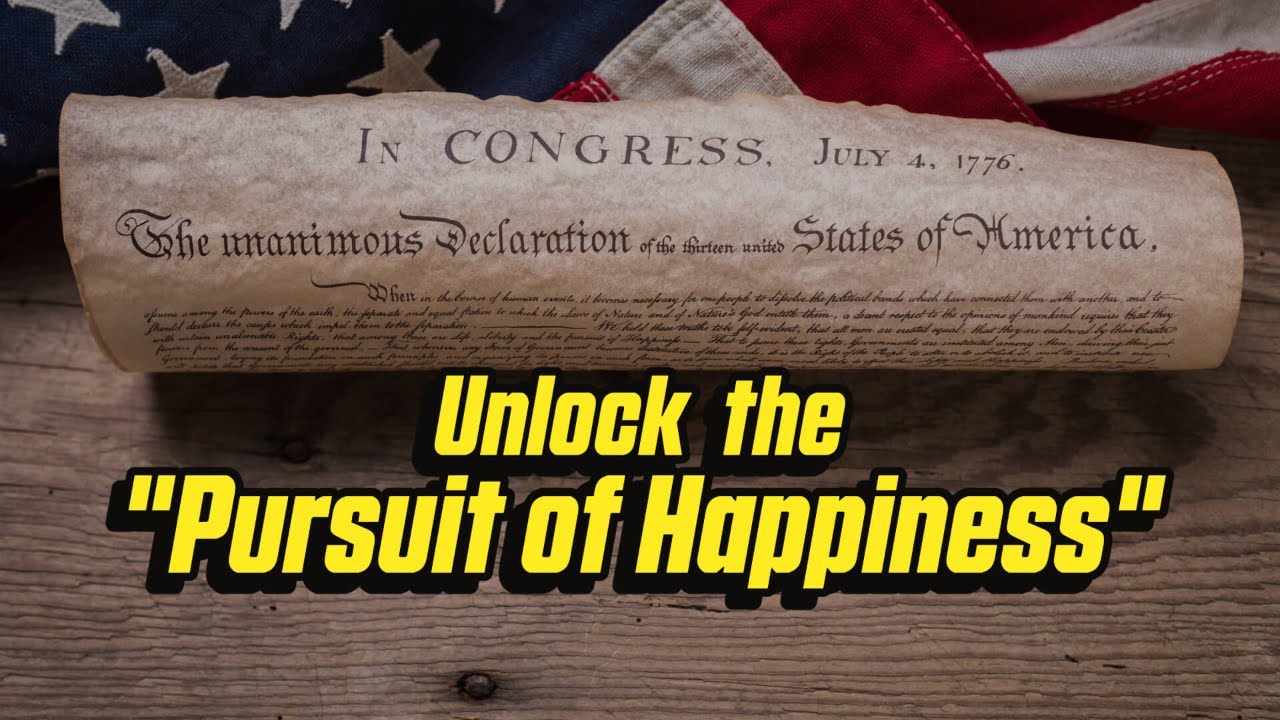
Forget everything the government-run schools have taught you about the pursuit of happiness. The founders had a far more radical understanding, something that most history lessons miss or just completely ignore, whether on purpose or not. In this article, we unlock this important message from the Declaration of Independence the way the founders intended it. It’s inextricably linked to individual personal freedom and property rights—not just physical property, but self-ownership as well.
Introduction
Welcome and thank you for joining me here on the path to Liberty. My name is Michael Bolden with the 10th Amendment Center, and this is the show for Monday, June 17, 2024. I hope you had an awesome weekend. Let’s dive right in.
Influences on Jefferson
Mike M. recently published an article pointing out that the writings of John Locke heavily influenced Thomas Jefferson as he drafted the Declaration. In his Second Treatise on Government, Locke listed life, liberty, and property as three fundamental natural rights. While Locke emphasized property as a fundamental right, he also recognized that people naturally seek happiness and that governments should not block the path to it.
Locke stated in “An Essay Concerning Human Understanding” (1690): “The highest perfection of intellectual nature lies in a careful and constant pursuit of true and solid happiness. The care of ourselves, that we mistake not imaginary for real happiness, is the necessary foundation of our liberty.”
Expanding the Idea of Happiness
Jefferson, along with other founders like John Dickinson, was heavily influenced by Locke and other thinkers, such as Swiss philosopher Jean-Jacques Burlamaqui. Burlamaqui identified the pursuit of happiness as the purpose of all human actions. He linked happiness to property, stating that natural liberty is the right given to all mankind to dispose of their persons and property in a way that they judge most convenient to their happiness, provided they do not abuse it to the prejudice of others.
George Mason echoed these sentiments in the Virginia Declaration of Rights (1776), influencing Jefferson’s work on the Declaration of Independence. Mason wrote that all men are by nature equally free and independent and have inherent rights, including life, liberty, and the pursuit of happiness.
The Connection Between Happiness, Freedom, and Property
John Dickinson, in his “Letters from a Farmer in Pennsylvania” (1767-1768), emphasized the connection between happiness, freedom, and property. He wrote: “We cannot be happy without being free; we cannot be free without being secure in our property; we cannot be secure in our property if without our consent others may as by right take it away.”
Dickinson’s letters were among the most widely read documents on American liberty until Thomas Paine’s “Common Sense” in 1776. They significantly influenced Jefferson’s expression of the American mind in the Declaration of Independence.
The Radical Change in Views
The real American Revolution was a radical change in the viewpoints of the people from around 1760 until the outbreak of the War for Independence in 1775. Understanding the foundational principles of the American Revolution involves recognizing that freedom, property, and happiness are intertwined. John Adams stated, “Property must be secured, or liberty cannot exist.” This sentiment was shared by founders across different regions and backgrounds.
Self-Ownership and Consent
Property rights extend beyond physical possessions to include self-ownership. James Madison, in his 1792 essay on property, affirmed that property encompasses a man’s opinions, the free communication of them, religious liberty, and the free use of one’s faculties. Without self-ownership, possession of property can never remain secure.
John Jay, Samuel Adams, and James Otis Jr. all asserted that no power on earth has the right to take our property without our consent. This principle was foundational to the founders’ understanding of liberty and happiness.
Conclusion
In short, the pursuit of happiness as envisioned by the founders is deeply rooted in individual liberty and property rights. These principles are clearly expressed in the Declaration of Independence, which asserts that life, liberty, and the pursuit of happiness are unalienable rights. Understanding these connections helps us appreciate the radical and enduring vision of the American Revolution.
For more detailed insights and original source documents, visit the 10th Amendment Center. Your support helps us continue this important educational work. Join us as we explore and teach these essential foundational principles of freedom, property rights, and self-ownership.
![Understanding the Second Amendment: Eight Essential Principles [VIDEO]](https://wp.fifu.app/smellthefreedom.org/aHR0cHM6Ly9pLnl0aW1nLmNvbS92aS9pWnUyN005a3pTTS9tYXhyZXNkZWZhdWx0LmpwZw/14705cfc436c/understanding-the-second-amendment-eight-essential-principles-video.webp?w=400&h=250&c=1&p=258444 "Understanding the Second Amendment: Eight Essential Principles [VIDEO]")
![A DIY Guide to Understanding the Original Meaning of the U.S. Constitution [VIDEO]](https://wp.fifu.app/smellthefreedom.org/aHR0cHM6Ly9pLnl0aW1nLmNvbS92aS9xaGYtU1FkcDk0QS9tYXhyZXNkZWZhdWx0LmpwZw/d458ce77a520/a-diy-guide-to-understanding-the-original-meaning-of-the-u-s-constitution-video.webp?w=400&h=250&c=1&p=258439 "A DIY Guide to Understanding the Original Meaning of the U.S. Constitution [VIDEO]")
![The Anti-Federalist Concerns: Was the Constitution a Blueprint for Tyranny? [VIDEO]](https://wp.fifu.app/smellthefreedom.org/aHR0cHM6Ly9pLnl0aW1nLmNvbS92aS9OTTN4SGNNd0Nyay9tYXhyZXNkZWZhdWx0LmpwZw/c210deb6864f/the-anti-federalist-concerns-was-the-constitution-a-blueprint-for-tyranny-video.webp?w=400&h=250&c=1&p=258437 "The Anti-Federalist Concerns: Was the Constitution a Blueprint for Tyranny? [VIDEO]")