
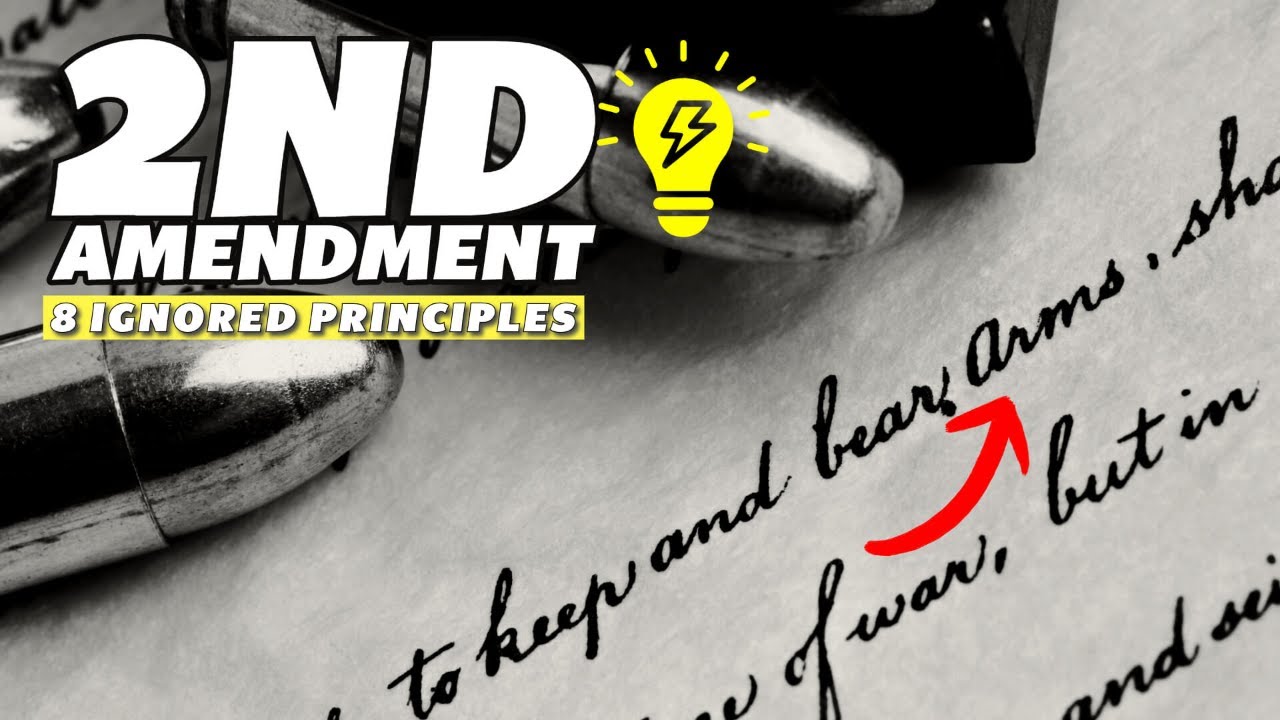
![Understanding the Second Amendment: Eight Essential Principles [VIDEO]](https://wp.fifu.app/smellthefreedom.org/aHR0cHM6Ly9pLnl0aW1nLmNvbS92aS9pWnUyN005a3pTTS9tYXhyZXNkZWZhdWx0LmpwZw/200610b9f2f3/understanding-the-second-amendment-eight-essential-principles-video.webp?w=1280&h=720&c=0&p=258444 "Understanding the Second Amendment: Eight Essential Principles [VIDEO]")
The Second Amendment of the United States Constitution is often a subject of intense debate. To grasp its significance fully, it’s crucial to understand the foundational principles laid out by the founders. This article highlights eight essential principles behind the Second Amendment, shedding light on its true purpose and meaning.
1. The Right to Keep and Bear Arms is a Natural Right
St. George Tucker, in his “View of the Constitution of the United States” (1803), described the right to self-defense as the first law of nature, underscoring the idea that the right to keep and bear arms is inherent to human nature and not granted by government. Samuel Adams echoed this sentiment in 1772, stating that the natural rights of life, liberty, and property include the right to support and defend them.
2. The Second Amendment is Not a Gun Permit
Your rights, including the right to bear arms, exist because you are human, not because the government grants them. The Second Amendment merely acknowledges these pre-existing rights rather than creating them.
3. Federal Gun Control Laws Lack Constitutional Authorization
There are zero federal gun control laws authorized by the Constitution. This includes all historical and current legislation, such as the National Firearms Act of 1934 and the Gun Control Act of 1968. According to Theophilus Parsons in the Massachusetts ratifying convention, no power was given to Congress to infringe on the natural rights of the people.
4. Local Restrictions Also Violate Liberty
Local restrictions on the right to bear arms are equally violations of liberty. Mercy Otis Warren stated that self-defense is a primary law of nature that no societal law can abolish. James Wilson and other founders argued that municipal regulations cannot abrogate the primary law of nature.
5. Four Primary Reasons for the Second Amendment
The founders identified four main reasons for the Second Amendment:
- Promoting the natural right of self-defense.
- Ensuring states could balance federal military power through their militias.
- Defending against foreign invasion.
- Protecting against domestic tyranny.
6. Proper Weapons Are Necessary for Self-Defense
To fulfill the Second Amendment’s purposes, citizens must have access to military-grade weapons. Tench Coxe in 1788 stated that Americans’ birthright includes the implements of a soldier, essential for defending against standing armies and tyrannical government forces.
7. Disarming the People is Tyranny
The founders recognized that disarming the populace is a hallmark of tyranny. George Mason and Noah Webster emphasized that disarming citizens paves the way for despotic rule. St. George Tucker warned that prohibiting the right to bear arms signals the brink of liberty’s destruction.
8. Protecting Rights Through Action, Not Pleas
To protect the right to bear arms, citizens must assert their rights rather than rely on government permission. James Iredell in the North Carolina ratifying convention highlighted that the inherent right of the people is to prevent government usurpation of liberty. Thomas Jefferson advised his nephew to regularly exercise and be proficient with firearms to instill independence and boldness.
Conclusion
Understanding these principles is vital to appreciating the Second Amendment’s role in American liberty. The founders envisioned a well-armed citizenry as a bulwark against tyranny and essential for maintaining a free state. To ensure these rights endure, it’s imperative to recognize and exercise them as inherent, natural rights, irrespective of government decrees.
![A DIY Guide to Understanding the Original Meaning of the U.S. Constitution [VIDEO]](https://wp.fifu.app/smellthefreedom.org/aHR0cHM6Ly9pLnl0aW1nLmNvbS92aS9xaGYtU1FkcDk0QS9tYXhyZXNkZWZhdWx0LmpwZw/d458ce77a520/a-diy-guide-to-understanding-the-original-meaning-of-the-u-s-constitution-video.webp?w=400&h=250&c=1&p=258439 "A DIY Guide to Understanding the Original Meaning of the U.S. Constitution [VIDEO]")
![The Anti-Federalist Concerns: Was the Constitution a Blueprint for Tyranny? [VIDEO]](https://wp.fifu.app/smellthefreedom.org/aHR0cHM6Ly9pLnl0aW1nLmNvbS92aS9OTTN4SGNNd0Nyay9tYXhyZXNkZWZhdWx0LmpwZw/c210deb6864f/the-anti-federalist-concerns-was-the-constitution-a-blueprint-for-tyranny-video.webp?w=400&h=250&c=1&p=258437 "The Anti-Federalist Concerns: Was the Constitution a Blueprint for Tyranny? [VIDEO]")
![The Pursuit of Happiness: A Foundational Perspective [VIDEO]](https://wp.fifu.app/smellthefreedom.org/aHR0cHM6Ly9pLnl0aW1nLmNvbS92aS9GemdXaGlqaHNnay9zZGRlZmF1bHQuanBnP3Y9NjY2ZjY2Nzk/ae9e3544843c/the-pursuit-of-happiness-a-foundational-perspective-video.webp?w=400&h=250&c=1&p=258435 "The Pursuit of Happiness: A Foundational Perspective [VIDEO]")